Haast's Eagle Pronunciation
Picture, name meaning, and how to say Haast's Eagle. Free guide for kids and parents.
How to Pronounce Haast's Eagle
HAHSTS EE-gul
ALL CAPS = stressed syllable

What does Haast's Eagle mean?
Eagle named after Julius von Haast
Name Roots
"Haast"
named after Sir Julius von Haast, German-born New Zealand geologist and explorer who first described the species in 1871
"eagle (Old English: earn)"
large bird of prey, from Proto-Germanic 'arnuz', meaning large predatory bird
Fun Facts
- ✓Haast's Eagle is the largest eagle ever confirmed to have existed, with females reaching 18 kg, nearly double the weight of today's heaviest eagle, the harpy eagle at up to 9 kg.
- ✓Despite its immense size, Haast's Eagle evolved from a very small ancestor: DNA analysis published in 2005 revealed its closest living relative is the little eagle of Australia, which weighs only about 0.9 kg, making it one of the most dramatic size increases in bird evolutionary history.
- ✓The Maori people of New Zealand called this eagle 'Pouakai' in their oral traditions and described it as a terrifying predator capable of killing humans, a claim that scientists now consider plausible given its talons could exert a grip force comparable to a lion's bite.
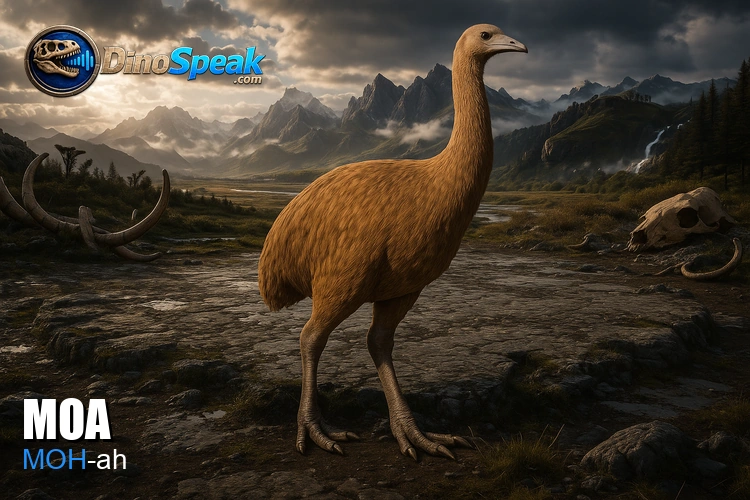
- ✓Haast's Eagle went extinct around 1445 CE, only about 600 years ago, because the Maori hunted its primary prey, the giant moa, to extinction, effectively starving the eagle out of existence within a few centuries of human arrival.
- ✓Fossil evidence shows that Haast's Eagle struck its moa prey from behind at high speed, driving its talons into the pelvis to immobilize the bird before delivering a killing bite to the skull or neck with its massive beak.

Period
Late Pleistocene to Recent
0.126 MYA to 1445 CE

Diet
Carnivore

Size
3.0 ft body length, 8-10 ft wingspan (0.9 m body, 2.4-3 m wingspan)
22-40 lbs (10-18 kg)

Type
Animalia
Learn More About Haast's Eagle
Related Prehistoric Creatures