Polacanthus Pronunciation
Picture, name meaning, and how to say Polacanthus. Free guide for kids and parents.
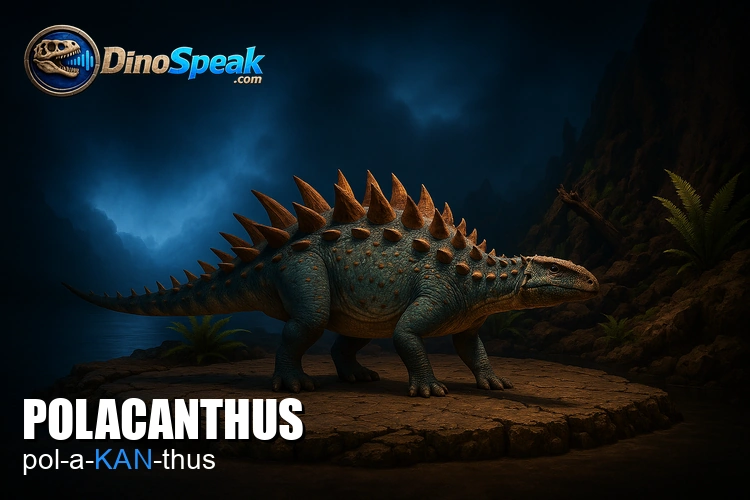
How to Pronounce Polacanthus
pol-a-KAN-thus
ALL CAPS = stressed syllable
Polacanthus Picture
What does Polacanthus mean?
Many spines or many thorns
Name Roots
"poly (Greek)"
many, from Greek polys
"akantha (Greek)"
thorn or spine, from Greek akantha
Fun Facts
- ✓Polacanthus was discovered on the Isle of Wight in 1865 by Reverend William Fox, an amateur fossil hunter who found bones eroding out of sea cliffs.
- ✓The bony hip shield of Polacanthus is one of the most complete parts of its skeleton ever found, yet paleontologists have never found a complete skull, making its exact head shape a mystery.
- ✓Polacanthus fossils have been found not only in England but also in Spain, meaning this armored dinosaur roamed across what was then a connected landscape of Early Cretaceous Europe.
- ✓Polacanthus lived during the Barremian and Aptian stages of the Early Cretaceous, between roughly 137 and 100 million years ago, sharing its world with large sauropods and early predatory theropods.
- ✓Scientists still argue today about whether Polacanthus belongs in the family Nodosauridae or in its own separate family called Polacanthidae, making it one of the most debated ankylosaurs in paleontology.

Period
Early Cretaceous
137-100 MYA

Diet
Herbivore

Size
13-16 ft (4-5 m)
~2,200 lbs (~1,000 kg)

Type
Ornithischia
Learn More About Polacanthus
Related Dinosaurs