Megacerops Pronunciation
Picture, name meaning, and how to say Megacerops. Free guide for kids and parents.
How to Pronounce Megacerops
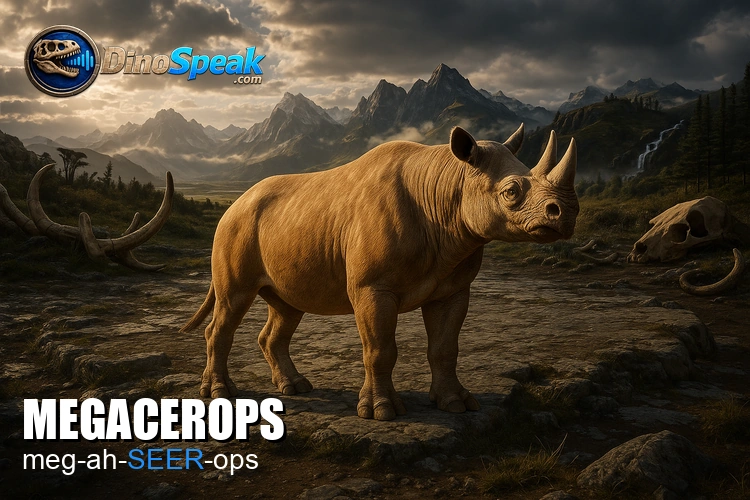
meg-ah-SEER-ops
ALL CAPS = stressed syllable
What does Megacerops mean?
Large horned face, from Greek roots
Name Roots
"mega"
large or great, from Greek 'megas'
"ceras"
horn, from Greek 'keras'
"ops"
face or eye, from Greek 'ops'
Fun Facts
- ✓Megacerops had a bizarre forked horn on its nose that split into two blunt prongs, and scientists believe males used these horns to shove and wrestle rivals, much like modern deer lock antlers, based on healed bone injuries found on dozens of fossil skulls.
- ✓Hundreds of complete Megacerops skulls have been found, making it one of the best-known large mammals in the entire fossil record, giving scientists enough material to study individual variation, sexual differences, and even growth stages across a whole population.
- ✓Megacerops went by a long list of confusing names for over 150 years, including Brontotherium, Brontops, and Titanotherium, before scientists finally agreed in 2009 that Megacerops was the correct and official name under international naming rules.
- ✓Despite its rhino-like appearance, Megacerops was not closely related to rhinos at all. It belonged to a completely separate group called brontotheres that branched off from the same ancient mammal lineage as horses and tapirs, making horses its closer cousins than rhinos.
- ✓Megacerops disappeared from the fossil record around 33.9 million years ago during a major extinction event called the Grande Coupure in Europe and the Eocene-Oligocene boundary in North America, when a global cooling event wiped out many large browsing mammals that depended on lush forests.


Learn More About Megacerops
Related Prehistoric Creatures