Irish Elk Pronunciation
Picture, name meaning, and how to say Irish Elk. Free guide for kids and parents.
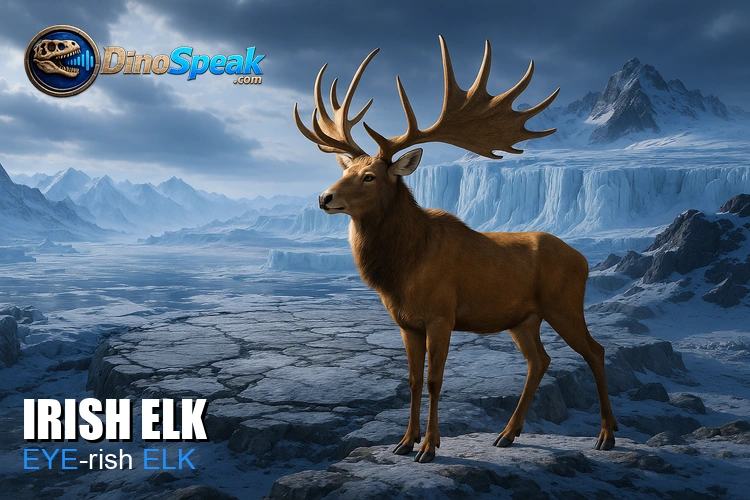
How to Pronounce Irish Elk
EYE-rish ELK
ALL CAPS = stressed syllable
What does Irish Elk mean?
Giant deer from Ireland and Eurasia
Name Roots
"Irish"
relating to Ireland, where many famous fossils were found in peat bogs; from Old English 'Iras' meaning the Irish people
"Elk"
a common name for large deer; from Old Norse 'elgr' meaning moose or large deer
"Megaloceros"
giant horn or great antler; from Greek 'megas' meaning great and 'keras' meaning horn
Fun Facts
- ✓Each antler of the Irish Elk could weigh up to 40 kg (88 lbs) on its own, meaning the male carried the equivalent of two large car tires balanced on its head at all times.
- ✓The Irish Elk is not actually an elk at all. Scientists now agree its closest living relative is the fallow deer (Dama dama), a much smaller deer species common in European parks today.
- ✓The last known Irish Elk did not die out with the mammoths around 10,000 years ago. A population survived in western Russia until about 7,700 years ago, meaning it outlasted most other Ice Age megafauna.
- ✓Irish Elk antlers were shed and regrown every single year. Growing back 40 kg of antler in a few months required enormous amounts of calcium and phosphorus, and scientists believe mineral deficiencies may have contributed to the species' decline.
- ✓Thousands of Irish Elk skeletons have been pulled from Irish lake beds and peat bogs, many of them perfectly preserved. The National Museum of Ireland and the Natural History Museum in London both hold spectacular mounted specimens standing over 11 feet tall.

Period
Pleistocene to Early Holocene
0.78-0.0077 MYA

Diet
Herbivore

Size
7-8 ft (2.1-2.4 m) at the shoulder
1,320 lbs (600 kg)

Type
Mammalia
Learn More About Irish Elk
Related Prehistoric Creatures