Ctenochasma Pronunciation
Picture, name meaning, and how to say Ctenochasma. Free guide for kids and parents.
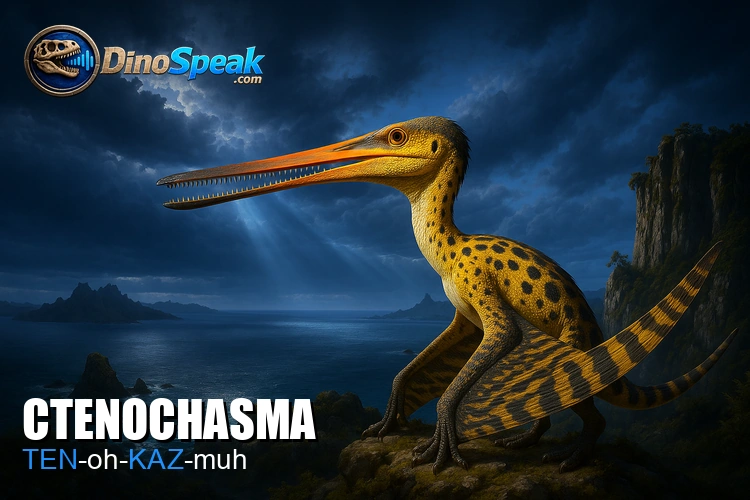
How to Pronounce Ctenochasma
TEN-oh-KAZ-muh
ALL CAPS = stressed syllable
What does Ctenochasma mean?
Comb gap or comb opening
Name Roots
"kteno (Greek)"
comb, from Greek 'kteis' referring to a toothed comb shape
"chasma (Greek)"
gap, opening, or chasm, from Greek 'khasma'
Fun Facts
- ✓Ctenochasma had up to 260 teeth in its jaws, more than almost any other flying reptile ever discovered, earning it the nickname 'the comb-toothed pterosaur' among paleontologists.
- ✓The Solnhofen Limestone where Ctenochasma fossils were found is the same famous rock formation that preserved Archaeopteryx, meaning these flying reptiles lived alongside the earliest known birds.
- ✓Ctenochasma fossils were first described in 1852 by German paleontologist Christian Erich Hermann von Meyer, who also named Archaeopteryx just a decade later, making him one of the most important fossil hunters in history.
- ✓Scientists believe Ctenochasma waded in shallow coastal lagoons in what is now southern Germany, which 150 million years ago was a warm tropical sea dotted with islands, nothing like the landlocked country it is today.
- ✓Three separate species of Ctenochasma are recognized today: C. roemeri, C. taqueti, and C. elegans, and they differ enough in size and tooth count that some researchers think they may have fed on slightly different prey to avoid competing with each other.

Period
Late Jurassic to Early Cretaceous
145-137 MYA

Diet
Filter Feeder

Size
2 ft (0.6 m) body, wingspan up to 4 ft (1.2 m)
1-2 lbs (0.5-1 kg)

Type
Pterosauria
Learn More About Ctenochasma
Related Prehistoric Creatures